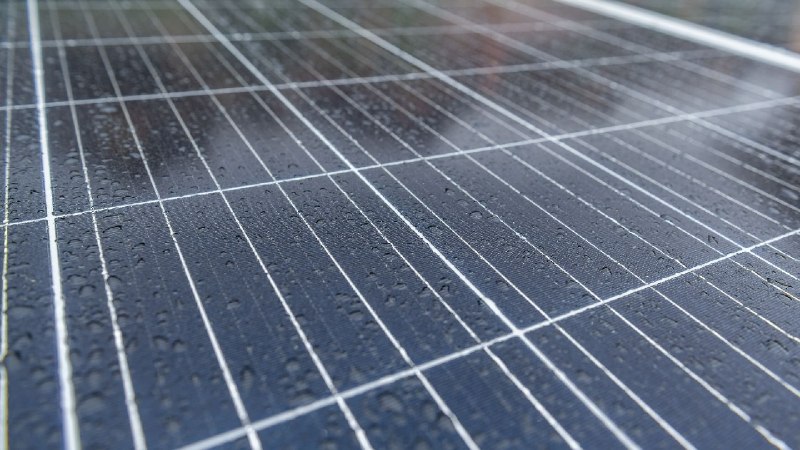
Researchers at the Institute of Materials Science of Seville have developed a hybrid perovskite-based device capable of generating electricity from two sources at once — sunlight and rain. This helps it maintain efficiency even in cloudy weather, when conventional solar panels work less effectively.
The key element is an ultrathin film about 100 nanometers thick, created using plasma technology. It protects the perovskite from moisture and at the same time enhances the absorption of sunlight. In addition, the film’s surface has triboelectric properties — it converts the energy of falling raindrops into an electrical pulse. In experiments, a single drop of water generated a voltage of up to 110 volts — enough to power small devices.
In recent years, the solar energy market has been actively looking for ways to improve generation stability. Energy storage systems, hybrid systems and new materials are being developed. But the idea of using rain as a full-fledged energy source is relatively rare — and that is where the practical novelty of the ICMS work lies.
Potential applications include, above all, autonomous systems — sensors on bridges, environmental stations and agricultural equipment. Where there is no access to power grids, a reliable energy source is a key factor.