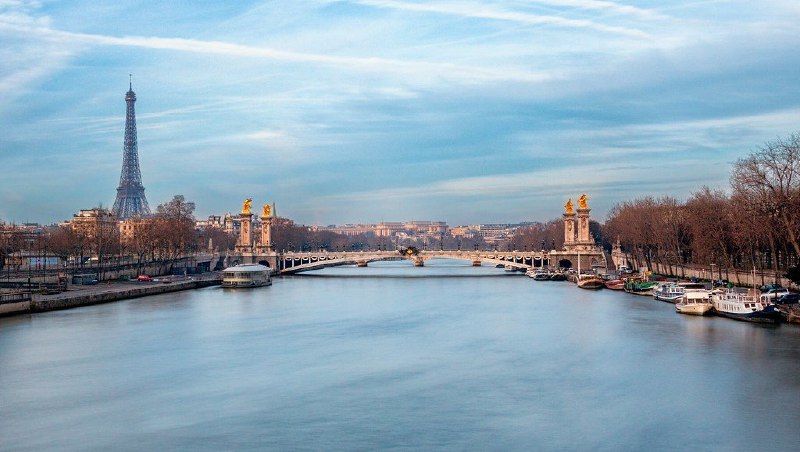
Paris’s main river, the Seine, is literally cooling the city: its water is used to operate the largest centralized cooling system in Europe. Cool water flows through a 100-kilometer network of pipes, cools buildings via heat exchangers, and then returns to the river.
Water conducts heat 800 times better than air, so cooling is faster, cheaper, and safer for the environment. Unlike air conditioners, the system does not release heated air into the street, helping to avoid the urban heat island effect. Its users include more than 800 buildings and the Louvre, which especially needs stable climate conditions. Energy use remains minimal, with most of it spent simply pumping the water.
A decision has already been made to more than double the pipeline network. This will make it possible to cool an additional 2,200 buildings. The technology is also used in winter, when buildings receive heat from factories and data centers. The result is a closed loop in which the city heats and cools itself. And the Seine once again serves the city — not only as a place for swimming, but also in a technologically advanced form.