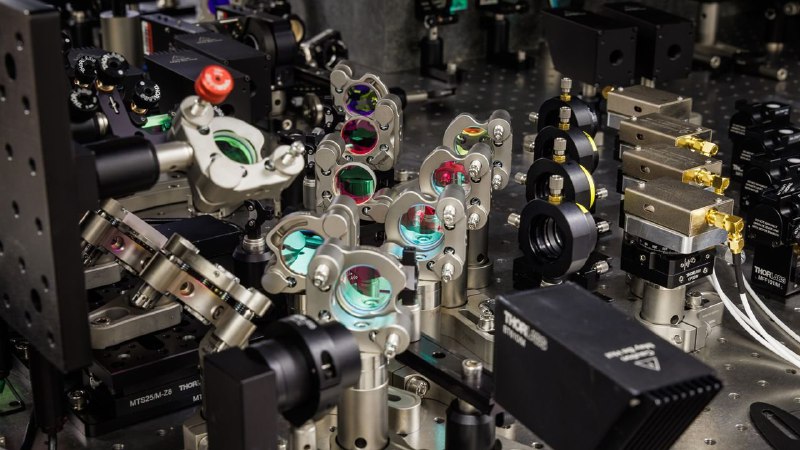
Microsoft, as part of Project Silica, has demonstrated the ability to store 4.8 TB of data on ordinary borosilicate glass — the same material used in kitchenware and oven doors. The volume of information — around 200 4K films — is placed on a glass plate measuring 2 x 120 mm in 301 layers.
The technology is based on laser writing of voxels — three-dimensional structures inside the glass. It uses the effect of birefringence, as well as phase changes in the material, to encode information. The writing speed is 3.13 MB per second, which is lower than that of modern storage devices, but durability is the priority.
Such glass media can preserve data readability for more than ten thousand years. Unlike earlier experiments with expensive quartz, the project now uses mass-market borosilicate glass, bringing the technology closer to practical use.
The project is aimed at creating long-term archives — including for storing cultural heritage. In the future, the company plans to improve laser systems and increase writing speed while maintaining the key advantage — extreme data resilience. The idea that a digital archive can outlast more than one generation is truly impressive!