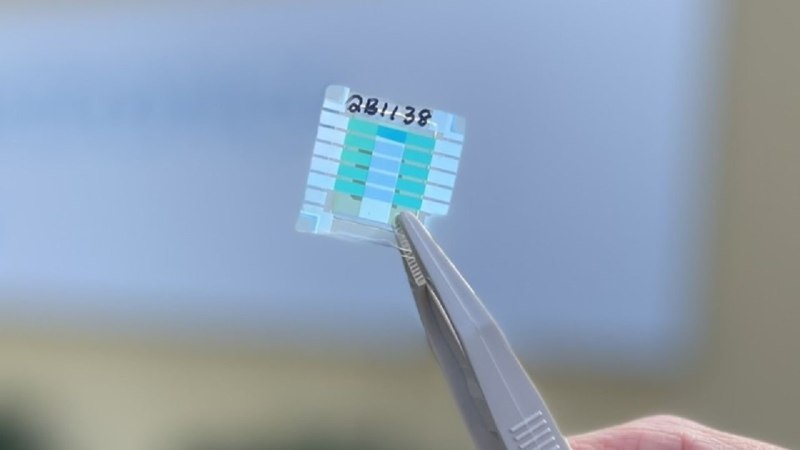
Australian researchers have presented the world’s first prototype of a quantum battery. The device is built on a multilayer organic microcavity made of materials capable of trapping light. It is charged wirelessly with a laser, and the researchers examined its behavior using spectroscopy.
A conventional chemical battery, as a rule, requires more time to charge as its capacity increases. The quantum system, in the scientists’ concept, should work in the opposite way: the more interconnected elements there are, the faster the collective charging should be. In other words, increasing the system does not slow the process down, but speeds it up.
The previous version, created by James Quach’s team in 2022, could only store charge that could not then be used. The new prototype closes exactly that gap. Its charge is still tiny — a few billion electronvolts — not enough even for a smartphone. And it holds that charge for just a few nanoseconds. But it is precisely such “small” results that usually drive big technologies.