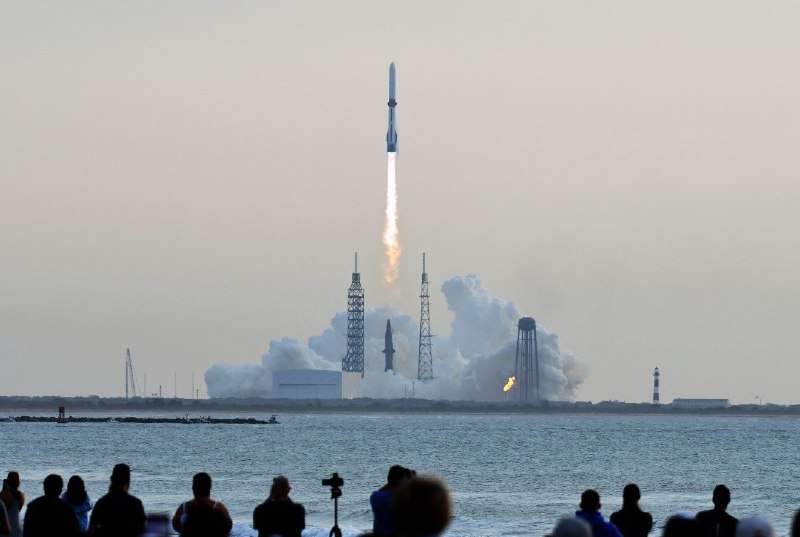
Blue Origin successfully reused the first stage of its New Glenn rocket for the first time. This happened a little more than a year after its first flight and marked an important step in the development of reusable technologies.
The rocket launched successfully and placed AST SpaceMobile’s communications satellite into space. During the operation of the upper stage, deviations occurred, and the spacecraft was not inserted into the planned orbit. However, the first stage, previously used on a NASA mission, returned normally and made a landing about ten minutes after liftoff, confirming that the reusable technology works. Such difficulties at the early stages of development are considered normal — SpaceX faced similar problems at the beginning as well.
Reusability is not just an engineering achievement, but an economic tool. If a rocket once had to be effectively “burned” on every launch, now its key element can be used again. This sharply reduces the cost of a launch — and therefore makes space more accessible for a wider range of tasks.
This approach has already proven effective at SpaceX, but the emergence of a second player changes the rules of the game. Competition in space is rare and valuable: it almost inevitably leads to lower prices and faster progress. Cheaper launches mean more communications and observation satellites, including projects like AST SpaceMobile, which aim to provide connectivity even in the most remote regions. It also creates an opportunity for scientific missions that were previously delayed because of high costs, and for new commercial projects.