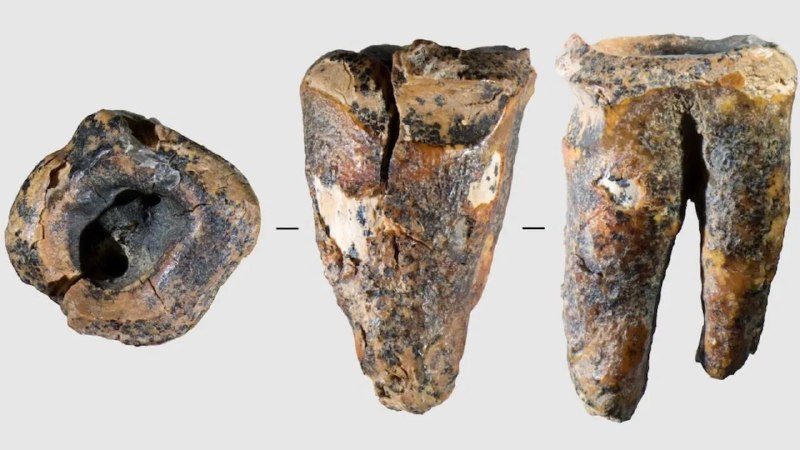
In Chagyrskaya Cave in Altai, researchers have found one of the oldest known pieces of evidence of dental treatment. A study of a Neanderthal tooth dating back about 60,000 years showed that a deep hole on its surface was made deliberately, using a sharp stone tool.
The tooth belonged to the lower molar of an adult individual found in 2016. Microscopic analysis revealed signs of severe tooth decay and characteristic grooves formed by rotational movements of a thin, sharp object. The researchers recreated similar damage on modern teeth and obtained a comparable result. In their view, Neanderthals were trying to remove diseased tissue — in effect, carrying out a primitive dental procedure.
Most importantly, the tooth preserved traces of later chewing. This means that the person survived the intervention and continued living afterward. Scientists do not yet know whether the patient performed the procedure themselves or was helped by other members of the group, but the find points to developed skills, precise motor control, and an understanding of the causes of pain.
Until now, the oldest evidence of dental treatment was thought to come from Homo sapiens finds in Italy dating to about 14,000 years ago. The new discovery pushes the beginnings of dentistry back by almost 45,000 years and shows that Neanderthals were much more advanced than is often assumed.
This is not the first evidence of their complex behavior. Archaeologists have already found signs that Neanderthals cared for sick children, helped the injured, and used medicinal plants. This find makes them unexpected pioneers of dentistry as well.