Every year, the Nobel Prize reminds us that humanity does not stand still — it explores, creates, protects and transforms.
The Physics Prize went to John Clarke, Michel Devoret and John Martinis. Back in the 1980s, they demonstrated quantum effects in macroscopic devices. Until then, this had been thought possible only in the microscopic world of atoms. Their work laid the foundation for the development of quantum technologies today. According to the World Economic Forum, the combined economic value of the quantum economy could reach up to $2 trillion over the next 10 years.
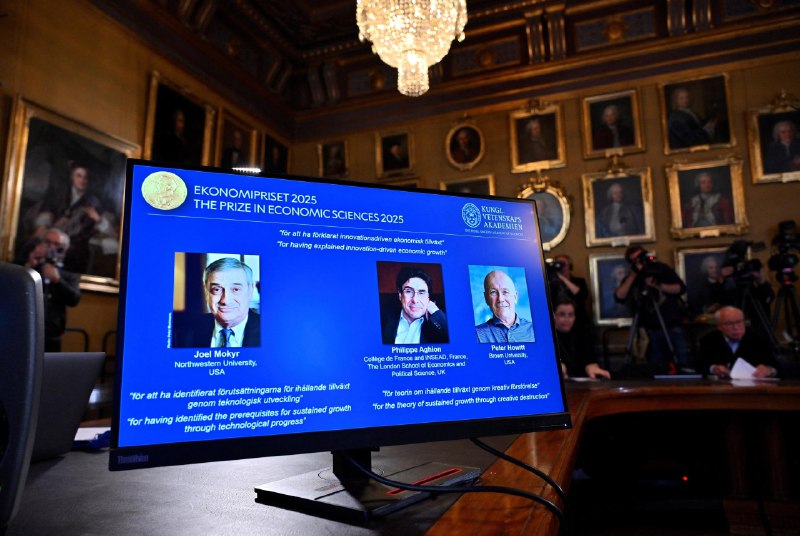
Joel Mokyr, Philippe Aghion and Peter Howitt received the Economics Prize for explaining that sustainable economic growth is impossible not only without innovation, but also without scientific knowledge and openness to change. Aghion and Howitt proposed the concept of “creative destruction” — when new, more efficient products and technologies replace old ones. Artificial intelligence, which is already transforming markets, is one example.
The Peace Prize was awarded to María Corina Machado, a political figure from Venezuela, for her struggle for democratic rights and her efforts to restore elections, justice and civic dignity in her country. She united a divided opposition and became a symbol of peaceful resistance.
The Chemistry Prize was shared by Susumu Kitagawa, Richard Robson and Omar Yaghi for creating metal-organic frameworks (MOFs). These structures resemble a sponge at the molecular level and can trap, filter or store different substances inside them. Their discoveries are already being used to purify water, capture CO₂ from the atmosphere and collect water from the air.
In Physiology or Medicine, Mary Brunkow, Fred Ramsdell and Shimon Sakaguchi were honored for the discovery of regulatory T cells — immune cells that prevent the body’s immune system from destroying the organism itself.
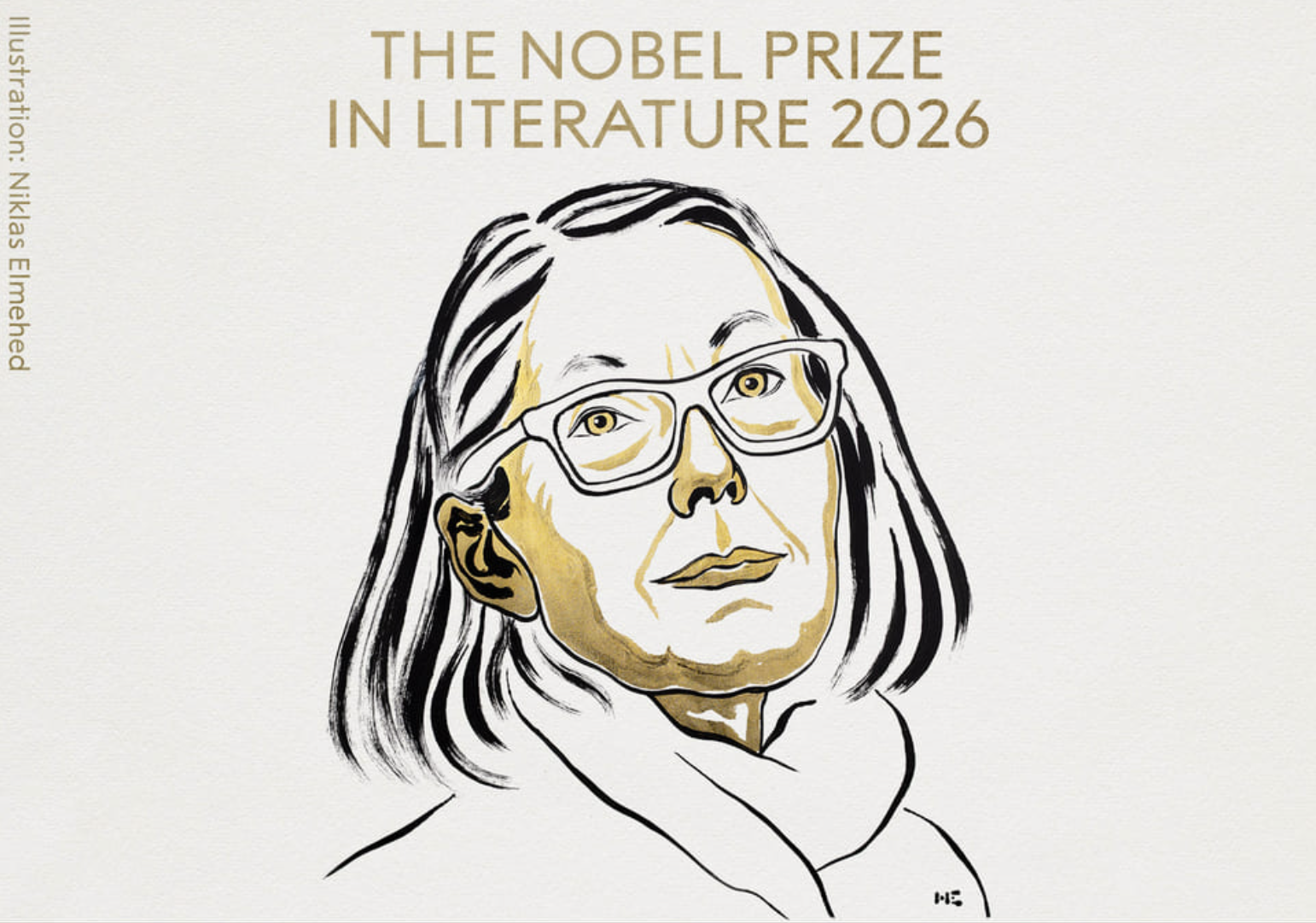
Hungarian writer László Krasznahorkai was awarded the Nobel Prize in Literature. His work speaks about the complexities of the modern world, but does not sink into despair — instead, it seeks, and finds, a point of support in art.
The Nobel Prize is not just a list of outstanding names, but a mirror of our time. It reflects the hopes, fears and challenges we face today.