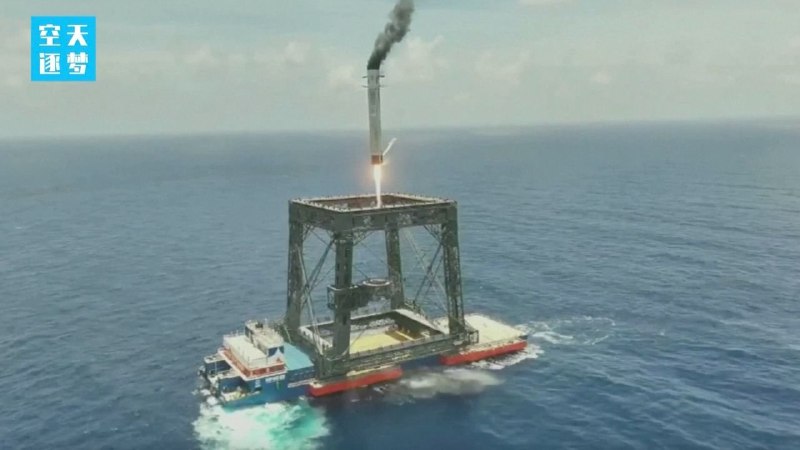
A few years ago, reusable rockets were practically synonymous with SpaceX. Now that is changing before our eyes.
Almost simultaneously, Japan successfully tested and landed the reusable rocket prototype RV-X, and China recovered a first stage during an orbital launch for the first time in its history. These events show that technologies that long remained an advantage of the United States are becoming available to other space powers as well.
A reusable first stage makes it possible to use the most expensive part of a rocket again and again, significantly reducing launch costs. When launches become cheaper, space stops being an exclusive domain of government agencies. Private companies enter the market, capable of building their own rockets, launching satellites and even carrying out interplanetary missions.
The clearest example is the Moon. In 2024, Intuitive Machines’ Odysseus became the first private spacecraft to make a soft landing on the Moon, although it completed only part of its mission. In 2025, Blue Ghost from Firefly Aerospace successfully carried out a full scientific mission. Private industry has shown that it can solve tasks that until recently were considered the preserve of government space agencies.
Now this model is beginning to spread around the world. China is actively developing its commercial space sector, and India recently joined the list of countries with its own private orbital rocket — Vikram-1.
It seems we are witnessing the start of a new stage of the space race. The competitors are no longer only states, but whole ecosystems of government agencies, universities and private companies. If reusable rockets really make launches mass-scale and affordable, more countries and companies will be able to carry out their own deep-space research. And that means there will likely be noticeably more major discoveries.