Physicists from the University of Innsbruck have, for the first time in the world, shown that quantum superposition—when a particle exists in multiple states at once—can persist stably at a temperature of 1.8 kelvin. This is about 60 times higher than the standard temperature for similar experiments: still extraordinarily cold by Earth standards, but warm for quantum physics. The results are published in Science Advances.
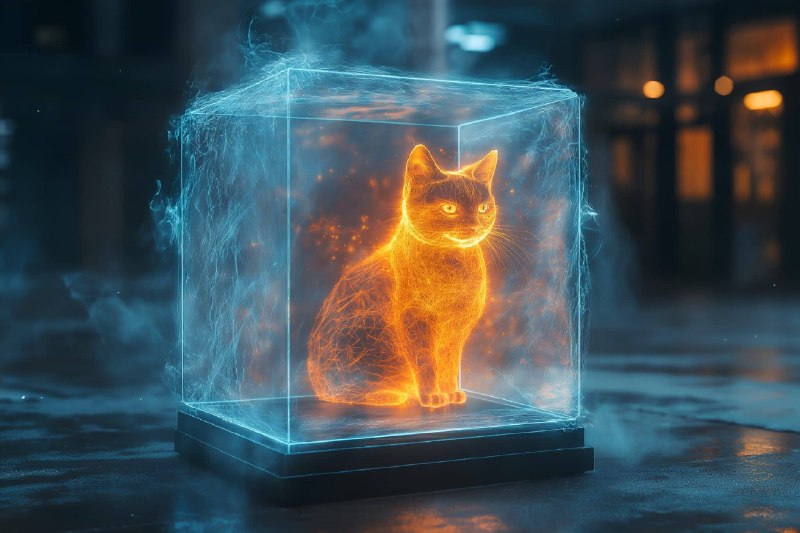
Using a superconducting system, ion traps, and precise quantum engineering, the researchers observed a so-called “hot state of Schrödinger’s cat.” This achievement demonstrates the possibility of preserving quantum properties in a warmer environment, which was previously considered impossible.
The technology could lead to a significant reduction in the cost of cooling (up to 90%) and make quantum devices more accessible, opening the way to large-scale production without huge infrastructure, precise medicine, protected communication, advanced sensors, and new computing systems.
Like the first computers: in the 1950s they took up entire halls, while today they can fit in a pocket.