China is carrying out one of the world’s largest solar energy projects in the Kubuqi Desert in Inner Mongolia. A solar corridor about 400 kilometers long and up to five kilometers wide is being built here. Once completed, its capacity is expected to reach 100 GW, with annual output of about 40 billion kWh, enough to supply electricity to the Beijing-Tianjin-Hebei region.
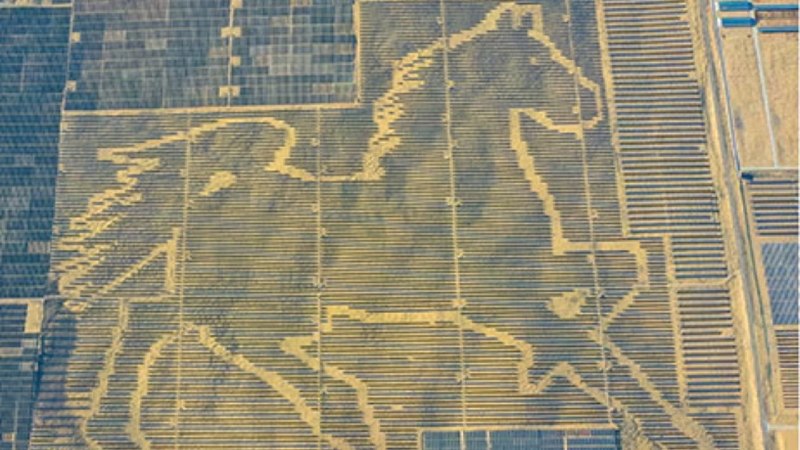
One of the most unusual facilities in the complex is the Junma Solar Power Station, where the panels form a giant image of a galloping horse. It has been entered into the Guinness World Records as the largest image made from solar panels. But it is not just an impressive design: the station generates about 2 billion kWh of electricity each year.
The project is addressing more than energy needs. The panels are installed higher than usual, which reduces wind speed, lowers moisture evaporation and creates conditions for vegetation to appear. Satellite observations have already confirmed the gradual greening of some desert areas. At the same time, China is building new power transmission lines to send electricity over a distance of about 1,300 kilometers to major cities.
This giant galloping horse has become a kind of symbol of the new energy era.