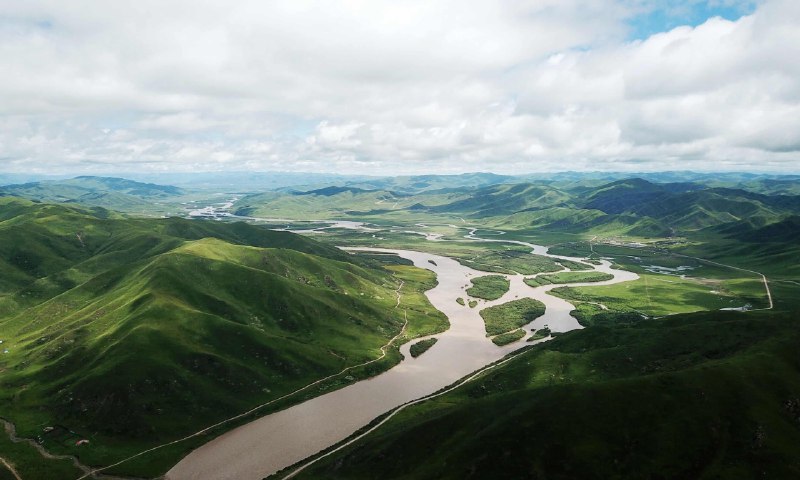
The Loess Plateau in China—previously viewed as the planet’s most eroded region—has become an example of large-scale natural recovery. By the end of the 20th century, excessive farming and livestock grazing had left an enormous territory—more than 640,000 square kilometers, home to about 100 million people—severely degraded.
In 1999, with support from the World Bank, the region launched the “Grain for Green” program, aimed at restoring nature to damaged land. The approach was to turn cropland into forests and pasture.
To ensure farmers would not be left without income, the project included subsidies, training, and alternative sources of earnings.
Resistance from local residents was overcome by tangible improvements. Forest area increased by 25%, soil erosion decreased, water quality improved, and wildlife returned to the region.
The program is presented as an example of how ecological restoration can proceed alongside care for people.