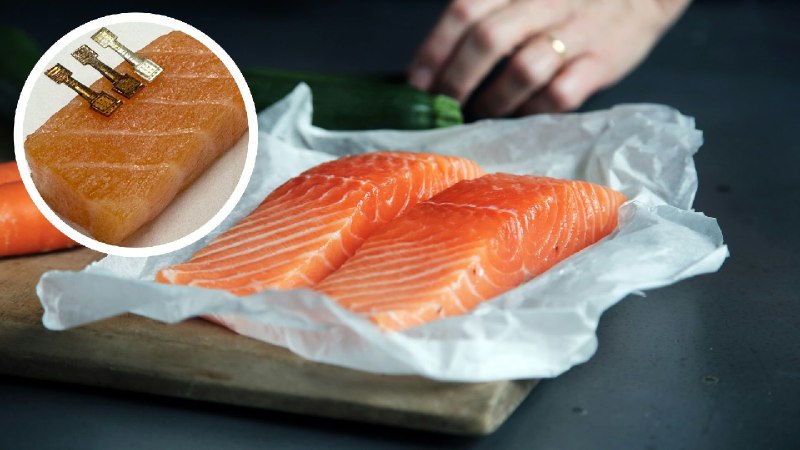
Determining how fresh the fish or meat in front of you is can be difficult. You can smell it, touch it, and make your best guess. But as technology advances, checking freshness is becoming an exact science.
One major breakthrough is a portable hypoxanthine sensor, which signals the start of decomposition. The 4×4 mm device uses microneedles to penetrate any protein-based product and displays a result in 100 seconds. In tests, it achieved accuracy comparable to laboratory methods.
Another approach is “smart” packaging with gel microparticles and natural pigments. When in contact with the product, the sensor changes color depending on pH level — a key marker of spoilage.
Color patches with machine image analysis have also been developed. They extract liquid from the surface of fish or meat and assess its acidity, while algorithms process a photo from a phone — and give a clear verdict on freshness.
Other approaches are also being developed in parallel: optical devices based on fluorescence, “electronic noses,” and “tongues.” These technologies make food quality assessment more reliable and more accessible. Fewer food poisonings, less food waste — and more confidence when choosing products.