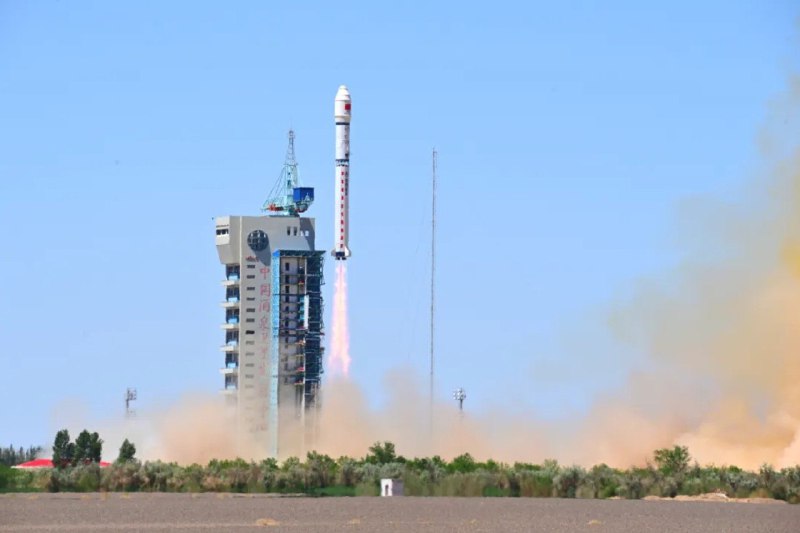
China has launched 12 satellites that have become the foundation of the world’s first orbital AI constellation. This is a key step in implementing the Star-Compute program: creating a computing cloud from 2,800 satellites by 2030.
The project is being carried out by the private company ADA Space and the Zhejiang Lab research center with state support. Its goal is to move key data-processing functions from ground data centers to orbit. Instead of the traditional approach—sending data to Earth for analysis—satellites will be able to process it directly in space, quickly and autonomously.
Each satellite can deliver up to 5 petaflops of computing power and store up to 30 TB of data. They are connected via a laser network with throughput of up to 100 Gbit/s. This level of autonomy and onboard computing capability in orbit is an absolute novelty.
Such a system would allow more timely analysis of data for environmental monitoring, disaster-warning efforts, and the development of “smart cities.” Until now, space has largely served as an “eye” and “ear,” collecting information. China is proposing to turn it into a full “brain” capable of acting independently.