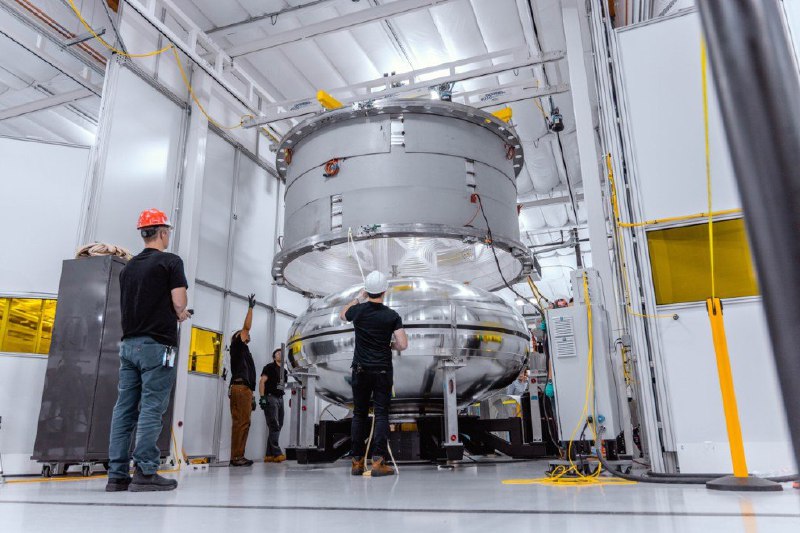
A fast delivery has long been standard on Earth, and now similar speeds are beginning to take shape in space as well. The U.S. startup Impulse Space has announced a service for ultra-fast delivery of satellites to geostationary orbit (GEO), at an altitude of about 36,000 kilometers above Earth. Where the trip once took weeks and months, it now takes just a few hours.
At the heart of the system is the Helios kick stage, equipped with a methane-oxygen engine. It separates from the main rocket in low Earth orbit and then carries satellites to GEO on its own. The project is led by Tom Mueller, SpaceX's former chief engine engineer and one of the creators of the powerful Raptor engine. The company has already signed three major contracts: with defense company Anduril (for a 2026 mission), internet operator Astranis (2027), and France's Infinite Orbits.
Geostationary orbit has traditionally been considered an elite zone: difficult, expensive, and requiring the highest level of reliability. Now those barriers are being lowered. The new technology could not only change the way satellites are launched, but also reshape the balance in the orbital market.