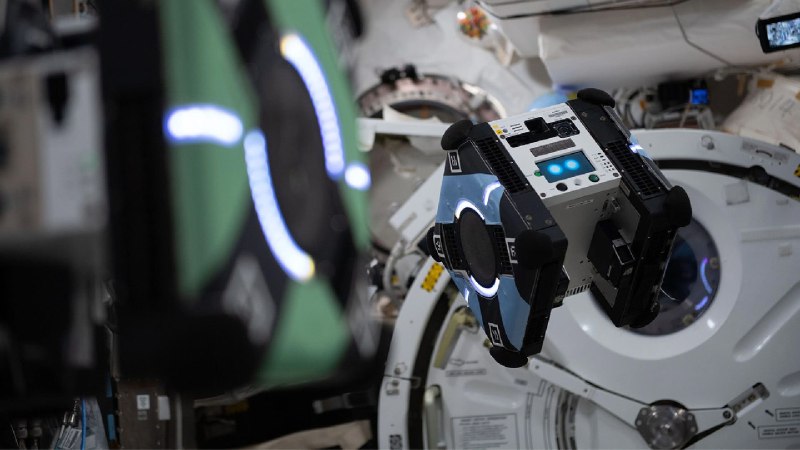
At the International Space Station, an AI-based robot control system developed at Stanford was tested in orbit for the first time. The Astrobee robot — an autonomous flying assistant — learned to move in confined spaces almost twice as fast as before, without constant oversight from the crew.
The new approach combines analysis of thousands of past routes with real-time path optimization. This allows the system to quickly find a suitable starting point and build a route even in difficult conditions, while meeting safety requirements.
During the orbital tests, the robot completed 18 routes on average 50–60% faster. Its efficiency was especially notable in three-dimensional maneuvers in narrow compartments. NASA has already approved the development, assigning it Technology Readiness Level 5.
On one hand, this is simply a faster route. On the other, it is a powerful symbol of change: autonomous systems are becoming full participants in space exploration.