Many of us remember being fascinated by the technologies in movies as children and thinking, “If only I could live to see that.” And yet, after not so much time, it turns out that some of those ideas are already in laboratories, factories and even everyday life — without any extra shine, but very much real.
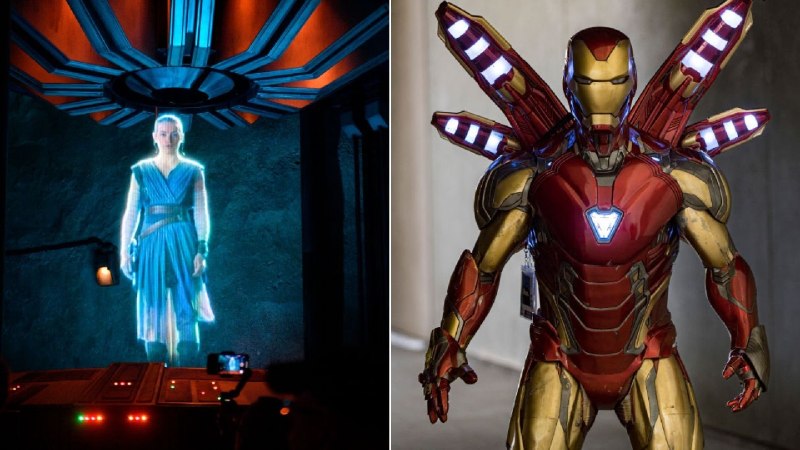
The first example is exoskeletons inspired by Iron Man. They still can’t fly, but they can already enhance the human body. Such devices help lift heavy loads and are actively used in industry and military projects. Not a superhero, but at least without back pain.
Second are medical devices in the spirit of the tricorder from Star Trek. There is still no full body scan in a second, but portable instruments can already do a lot. Third is magnetic levitation, inspired by the flying skateboard from Back to the Future Part II. Prototypes already exist and really do hover, albeit above special surfaces.
Fourth are holograms, familiar from Star Wars. Today, systems create three-dimensional images that can be viewed from different angles without a screen. Fifth are universal translators. Today, these are headphones with instant translation. They use artificial intelligence and cloud services, allowing people to speak different languages almost in real time.
Sixth is acoustic levitation. In practice, it is a way to hold small objects in the air using sound waves. The technology is already being explored for tasks where contact-free handling matters — for example, in medicine or when working with sensitive materials. Seventh are modular robots inspired by the Transformers. These are small devices that can connect with one another and form more complex structures.
It turns out that cinema did not so much predict the future as set its direction.