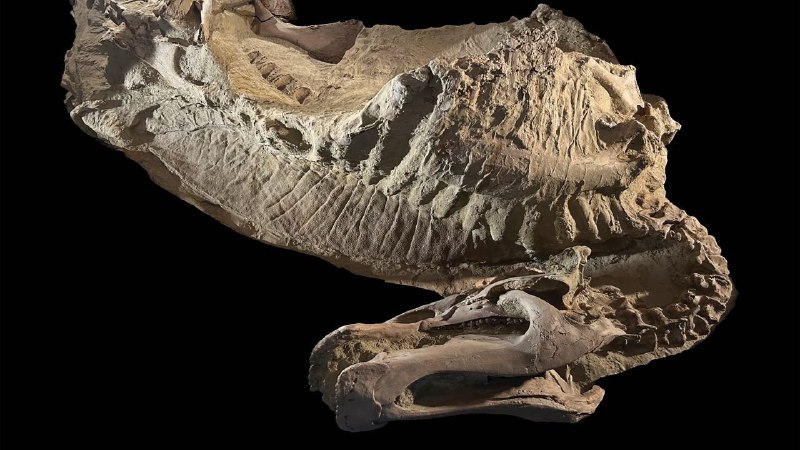
In the US state of Wyoming, paleontologists have discovered two extraordinarily well-preserved skeletons of duck-billed dinosaurs, Edmontosaurus annectens, which lived more than 66 million years ago. The main discovery is that these reptiles had hooves, the first confirmed example of such an anatomical feature in land-dwelling dinosaurs.
The scientists found the remains in the so-called “mummy zone,” using records and letters from paleontologists of the early 20th century. Although the remains are not true mummies, they are exceptionally well preserved: a clay coating captured impressions of skin, spikes, a crest, and hooves — like a kind of “natural cast.”
Modern imaging methods made it possible to study details of the structure. It turned out that the hooves allowed the dinosaurs to move efficiently through swampy terrain. This discovery broadens our understanding of the evolution of limbs in ancient animals and shows how unusual adaptation to the conditions of ancient Earth could have been.