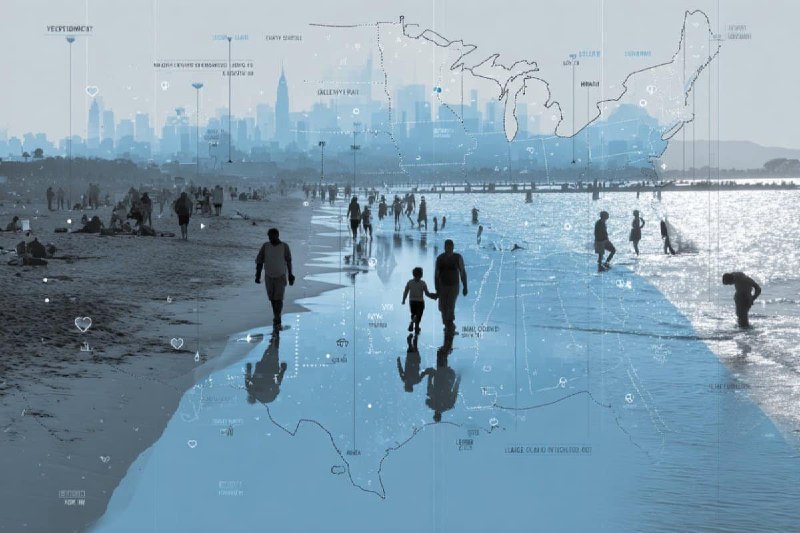
An extensive study based on data from more than 66,000 U.S. counties produced an unexpected result: Americans who live on the ocean coast, on average, live a year longer than the rest of the country.
The key point is not simply proximity to water, but specifically to the sea. Neither major rivers nor lakes in cities showed a comparable positive effect. Ocean shorelines, by contrast, offer a whole set of favorable factors: milder weather, cleaner air, more places to walk and be physically active, fewer droughts, and generally a higher standard of living.
The study covers not only cities but also rural areas. And even there, sea air shows a consistent association with longer life. This is the first study of such scale and systematization of the effect of so-called "blue zones"—areas near bodies of water—on health and longevity in real-world conditions.
The authors emphasize that what matters is not only the presence of water nearby, but also its quality and the environmental conditions around it. For cities where rivers and lakes are the main bodies of water, this is a signal: only investment in improving the environment and public spaces can turn such areas into true health zones.