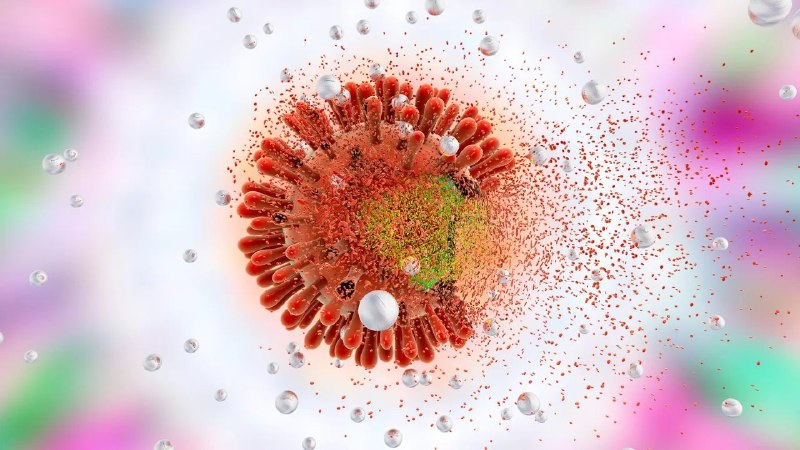
There have been about ten confirmed cases worldwide in which patients, by current evidence, have been rid of HIV. These are isolated stories, but they are changing the way medicine thinks about what is possible.
One of the latest examples is a patient in Norway. After a stem cell transplant from his brother, the virus stopped being detectable in his body. Such transplants are usually used for blood diseases, but in some cases they have led to HIV disappearing.
A key role is played by the CCR5 gene: it is a rare mutation that makes cells resistant to HIV. The virus cannot enter the cell, and its spread stops. Transplanting this gene effectively “reboots” the patient’s immune system.
HIV is difficult to cure completely because it knows how to “hide” in the body: the virus integrates its DNA into immune cells and can remain for years in so-called hidden reservoirs, inaccessible to therapy. Even if the drugs suppress it to an undetectable level, the virus can become active again if treatment is stopped, which makes full elimination especially difficult.
A bone marrow transplant is not a universal solution. It is a complex and risky procedure that cannot be used on a mass scale to treat HIV. Still, its results give scientists something much more valuable — an understanding of the principle. They confirm that a cure is possible in principle.