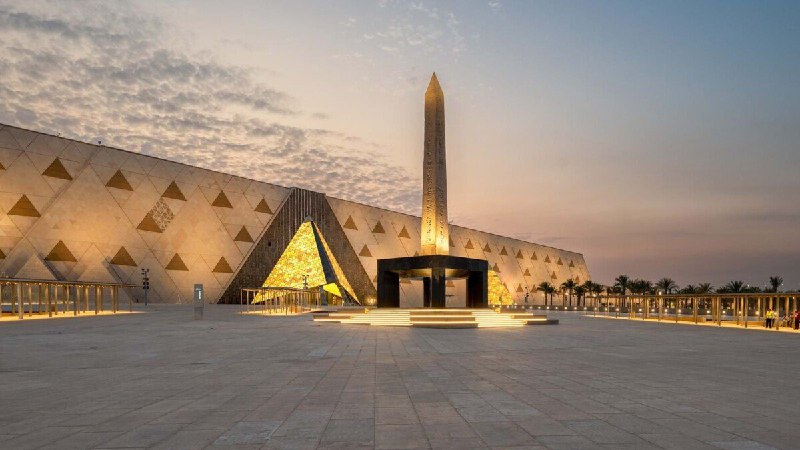
The Grand Egyptian Museum, whose construction took more than 20 years, is now officially welcoming visitors. The complex is located between Cairo and the Pyramids of Giza and covers an area equivalent to 94 football pitches. Its 100,000 exhibits span the history of humanity from the Paleolithic period (700,000 BC) to the Roman era. The museum’s internal layout is built around the “Grand Staircase”, symbolically leading through thousands of years of history.
Particular attention has been given to the new gallery of Pharaoh Tutankhamun — for the first time in 100 years since the discovery of his tomb, all 5,300 of his personal items have been brought together in one hall. The restored funeral boat of Pharaoh Khufu, more than 4,500 years old, is also on display for the first time.
The museum building was designed by the Irish studio Heneghan Peng Architects. Its façade is decorated with hieroglyphs and silhouettes of pyramids, and each gallery has been arranged so that Egypt’s history unfolds like a compelling narrative. Experts from 13 countries worked on the project, and the budget amounted to about $1.2 billion.
The museum is part of Egypt’s national tourism strategy: it is expected to attract up to 8 million visitors a year. Authorities also hope to return lost relics such as the Rosetta Stone and the bust of Nefertiti so that the museum can become a full custodian of the nation’s cultural heritage.