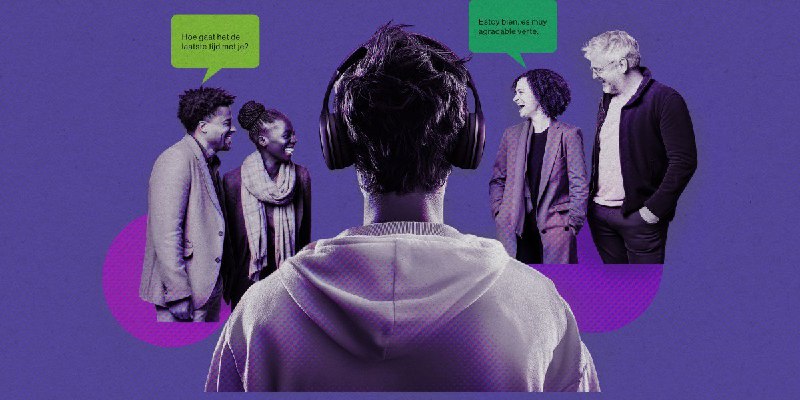
Researchers from the University of Washington have introduced Spatial Speech Translation — the first technology capable of recognizing and synchronously translating speech from multiple people in real time.
The system analyzes who is speaking, from which direction the voice is coming, clones voices’ timbre and intonation, and outputs the translation in English — as if the conversation partner switched to your language. It currently supports French, Spanish, and German, with German requiring a bit more time due to its grammar. The development is based on powerful chips and neural networks that can accurately recognize speech and intonation.
The authors aim to reduce translation delay to one second; today it is slightly more. The project is inspired by a personal story of Professor Shyam Golakotta, whose mother struggled with language difficulties after moving to a new place. He wants to ensure that every person can be heard, regardless of language. Against the backdrop of growing interest in instant translation devices, Spatial Speech Translation marks a new stage in communication.
Source: MIT Technology Review (2025-05-09)