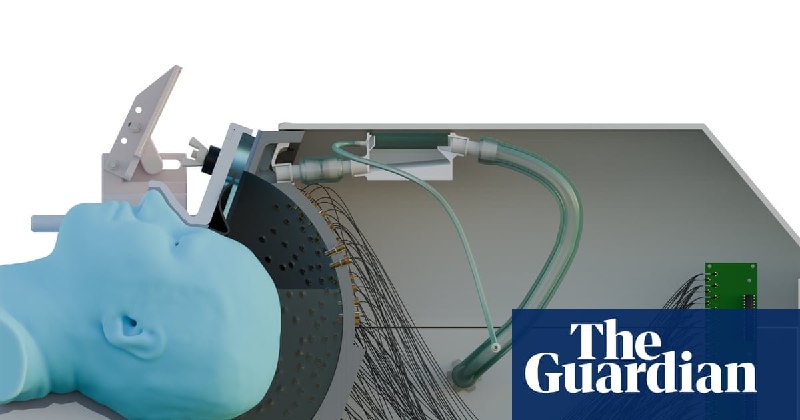
Scientists from Oxford and University College London have developed an ultrasound “helmet” capable of targeting the brain with high precision without surgery.
The device consists of 256 ultrasound sources and works together with an MRI scanner, allowing researchers to modulate the activity of even the smallest areas of the brain in a targeted way. Unlike invasive deep brain stimulation, the method does not require implanted electrodes and is fully non-invasive.
Tests on seven volunteers confirmed its effectiveness — the scientists achieved a sustained change in the functioning of the visual cortex after targeted exposure to the lateral geniculate nucleus. The method is already being considered as an alternative for Parkinson’s disease, depression, chronic pain and other neurological diagnoses.
The development is the result of a decade of work by an interdisciplinary team. Plans include introducing AI for autonomous operation and the possibility of use outside clinics.