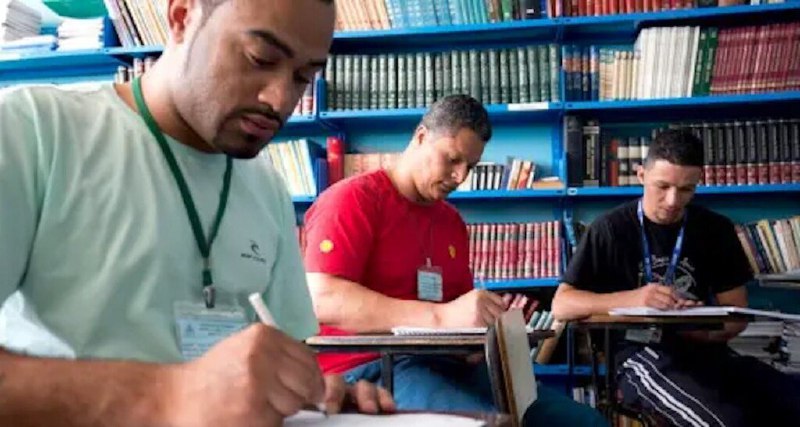
From Latin America to Central Asia, there has been a growing number of initiatives in which books serve as a key not only to knowledge, but also to freedom. Reading in prison is no longer merely a way to pass the time: it can be a real chance to shorten a sentence and return to normal life.
In 2012, Brazil was one of the first countries to launch a program that allows inmates to reduce their time for each book they read, provided they write a thoughtful essay. The maximum is 12 books and 48 days per year.
Similar programs exist in Bolivia, the United States, the United Kingdom, Kazakhstan, and Uzbekistan. Everywhere, the goal is the same: to give incarcerated people a chance for personal development and social rehabilitation through familiarizing themselves with literature. In Russia, in September 2024, a vice-speaker of the State Duma from the “New People” party proposed introducing a similar practice, but its discussion has not been finalized yet.
Beyond reducing repeat offending, these programs restore people’s sense of self-worth, teach them to analyze and empathize, and help them find new life benchmarks. After all, as Charles W. Eliot once said: “Books are the quietest and most steadfast of friends; they are the most accessible and wise of counselors, and the most patient of teachers.”