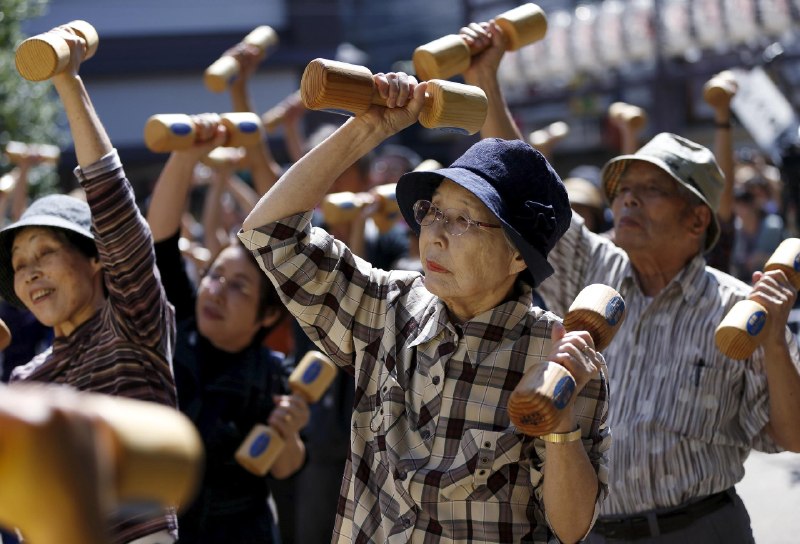
Asia is becoming the first region in the world where rapid population aging is already creating a new social and economic reality. According to projections, by 2050 more than 25% of residents will be over 60. Japan remains the oldest country, while China and South Korea are seeing some of the fastest rates of aging.
If old age used to be seen as a period of closure, it is now becoming a full stage of activity. People are living longer and want to remain involved in the economy, public life and culture. This requires a rethink of familiar models.
Public pension systems are under pressure, especially amid smaller families and economic instability. In China, the pension system relies heavily on the state, which is encouraging the development of personal savings, investments and insurance tools. Financial self-reliance is becoming increasingly important.
Major changes are also taking place in health care. The growing number of older people is increasing medical costs, so the focus is shifting toward prevention. Telemedicine, digital services and artificial intelligence-based technologies that help monitor health are becoming more widely used.
Older people are increasingly continuing to work thanks to flexible employment formats, remote technologies and retraining programs. Intergenerational communities are emerging, where experience becomes a valuable resource. Cities are also adapting: infrastructure is becoming more convenient for people of all ages.
What is new about the Asian approach is its holistic nature. Finance, health, work and social life are viewed as a single system. This is not just an attempt to cope with aging, but the creation of a new model of society in which a long life is not a burden, but new opportunities.