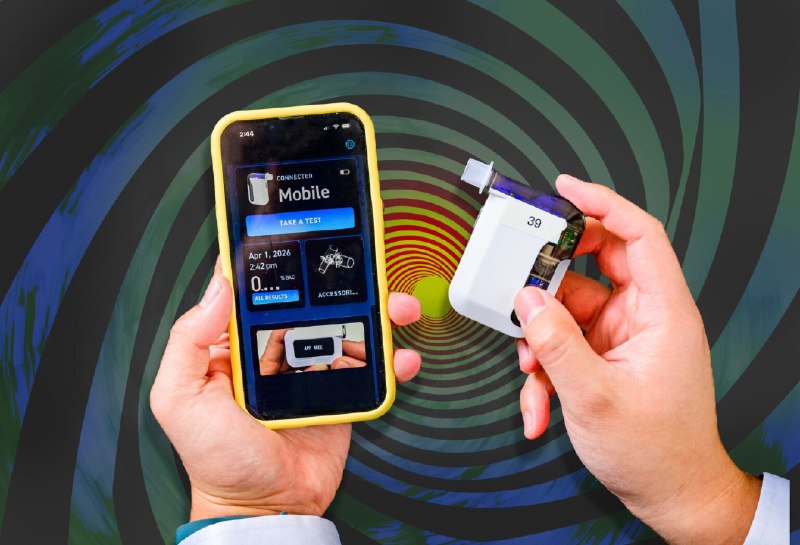
The University of Illinois Urbana-Champaign studied how mobile breathalyzers affect people’s behavior. These are small devices that connect to a smartphone and measure blood alcohol concentration, or BAC.
Researchers analyzed data from about 32,000 users between 2016 and 2022. Each participant took the test at least three times, and on average about 40 times over seven months. Before each measurement, the app asked them to guess their BAC. At the beginning, nearly 70% of users thought they were more sober than they actually were. This is especially important for heavier drinkers: such an error can easily turn into a dangerous decision to get behind the wheel.
Over time, self-assessment accuracy increased by 2.38%. At first glance, that may seem small, but the trend matters: people learn to compare their feelings with reality. Sometimes a specific number works better than any internal sense of certainty.
Behavior also changed. Among heavier drinkers, average BAC fell from 0.106% to 0.096%. Among lighter drinkers, the figure, by contrast, rose slightly from 0.058% to 0.067%. Researchers suggest that some users may have been guided by the well-known legal limit of 0.08%.
The study clearly shows the power of self-monitoring. When people regularly receive honest feedback, they are more likely to make decisions consciously. In addition, care for health is increasingly moving out of clinics and into everyday gadgets — step counters, smartwatches, sleep apps, blood pressure sensors. Now a pocket sobriety tool has joined them.