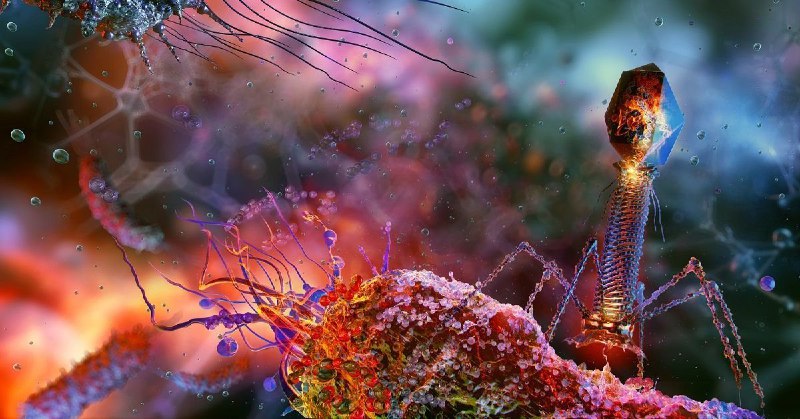
At the University of California, San Diego, an important step has been taken in the fight against antibiotic-resistant infections — one of the key threats to modern medicine. The team of scientists showed that bacteriophages can be purposefully “enhanced,” making them effective against bacteria resistant to most drugs.
The study focused on Klebsiella pneumoniae. It is often the cause of severe hospital-acquired infections, including pneumonia and sepsis, and is resistant to most antibiotics. Unlike classic phage therapy, where viruses work only against narrow strains, the scientists used a method of experimental evolution. Over the course of a month, the phages adapted to the bacteria in the laboratory, gradually overcoming their defense mechanisms.
As a result, the evolved phages were able to destroy a wide range of resistant strains and suppress bacterial growth for a long time. Genetic analysis confirmed that the effectiveness was linked to mutations that improved the recognition and attack of bacterial cells.
Instead of searching for rare suitable phages, this method rapidly adapts viruses to a specific pathogen. This makes the approach a promising tool at a time when antibiotics are increasingly powerless, and the fight against resistant infections requires fundamentally new solutions.