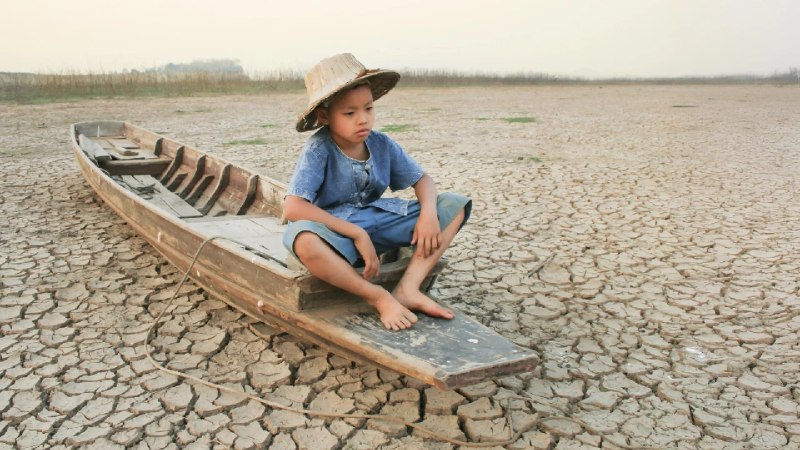
An international group of scientists has presented a study that is changing how climate risks are understood. The work shows that oceans not only shape climate, but also act as a kind of buffer that prevents droughts from spreading across the planet at the same time.
An analysis of climate data over the past century has revealed an optimistic picture. Synchronous droughts, which could paralyze global agriculture, affect only 1.8% to 6.5% of land. This is significantly less than earlier estimates and reduces concerns about a simultaneous global food crisis.
The scientists mapped so-called "drought hubs" — regions where dry conditions are most often synchronized. An analysis of crop yields showed that even moderate droughts can sharply reduce harvests. But an important compensating mechanism is at work here: thanks to oceanic processes, severe droughts rarely occur at the same time in several key agricultural regions.
The main factor behind this global balance is the natural El Niño and La Niña cycles. These fluctuations in the temperature of the Pacific Ocean’s surface waters redistribute climate anomalies around the planet, shifting droughts from one region to another. This creates a mosaic-like climate effect, preventing droughts from synchronizing on a global scale.
The scientists propose using an early warning system based on monitoring "drought hubs." Flexible logistics and well-designed agricultural policy could significantly soften the effects of climate fluctuations. In that case, drought could be treated as a manageable risk.