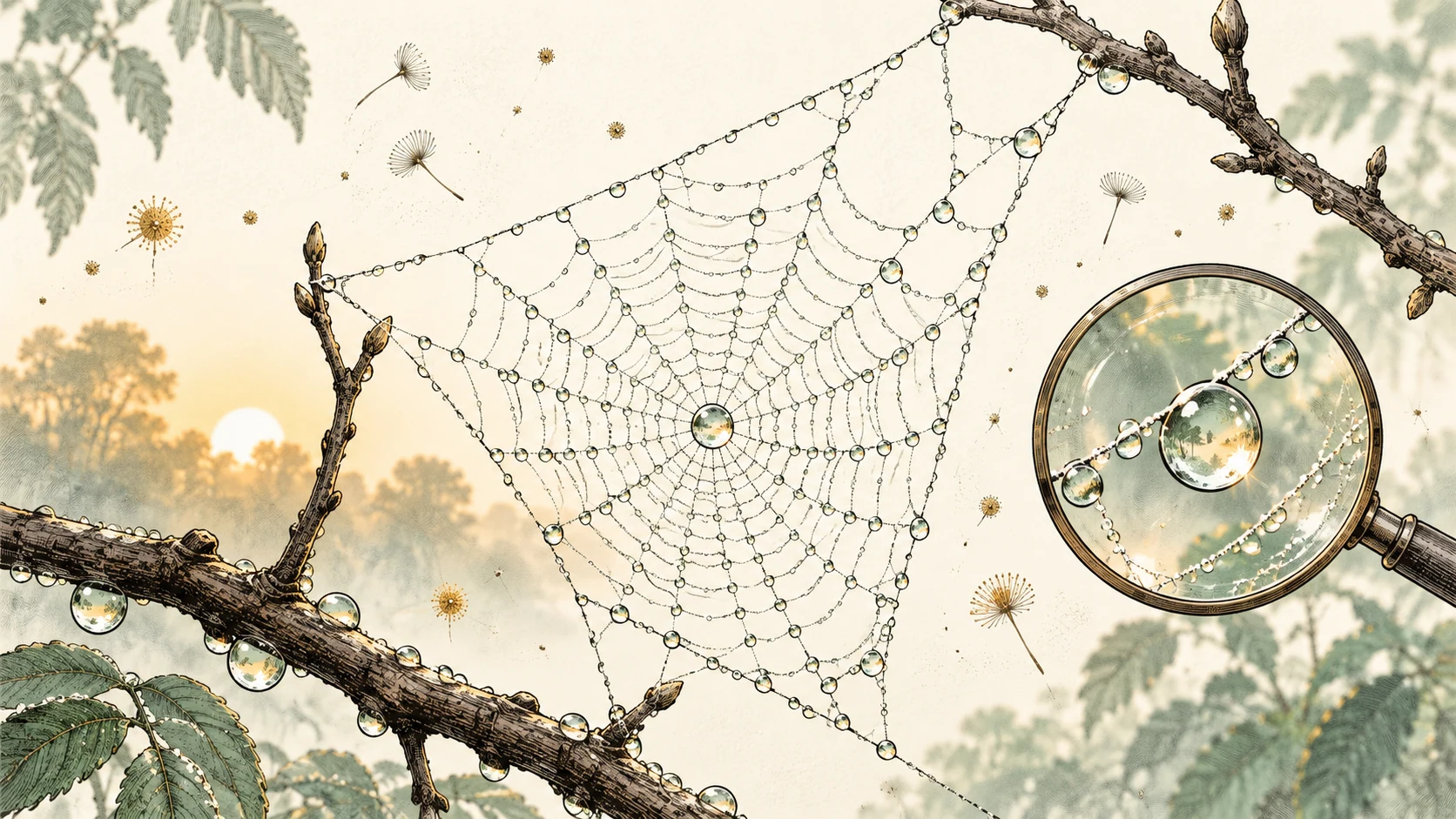
Ecologists have come up with an unusual way to count animals: not by looking for them, but by catching their DNA in spiderwebs. This could make monitoring biodiversity and invasive species easier — instead of long searches, it may be enough to collect what nature itself has left in the web.
But there is an ironic detail: for the experiment, scientists had to destroy about 40 real webs. A method meant to help study nature began with destroying spiders’ homes — not the best publicity for ecological science. So the researchers tested artificial webbing.
And then it got even more interesting: it turned out to be more effective than real webs at detecting fungi. This could help identify agricultural diseases earlier.
The idea is simple: hang up webs, wait, collect them, and sequence the DNA. In the future, such webs could become a cheap passive sensor of ecosystem health.