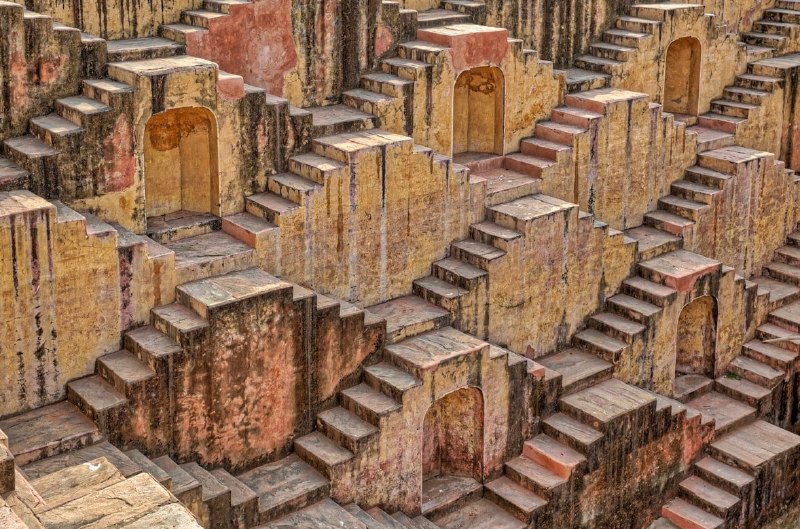
In India, approaches to solving the shortage of fresh water are developing more actively, combining modern methods and traditional engineering solutions. One such example is the restoration of stepwells — structures dating from the 11th to 18th centuries, designed to collect and preserve water in underground layers.
With its high population density, the country has only 4% of the world's fresh water reserves. More than 600 million people are already experiencing water scarcity, and by 2030 demand could double. The situation is complicated by dependence on groundwater sources and unstable monsoons.
Against this background, the stepwell system is once again becoming practically important. Their principle of operation is based on collecting rainwater, which undergoes natural filtration through sand, gravel and stone, replenishing underground reserves. This reduces dependence on unstable rainfall and minimizes water losses.
For a long time, such wells were seen as a relic of the past. Many of them were abandoned, filled with rubbish or lost their importance amid centralized water supply systems. However, practice has shown that modern infrastructure solutions do not always cope with the load, especially in rapidly growing cities. Today, the wells not only provide clean drinking water, but also consistently maintain its level even in the hot season.
Restoring the wells is not a universal solution, but part of a broader transformation. It works only in combination with other measures — from infrastructure upgrades to changes in the residents' own behavior. Water is no longer seen as an infinite resource and becomes something that requires attention, accounting and careful use.