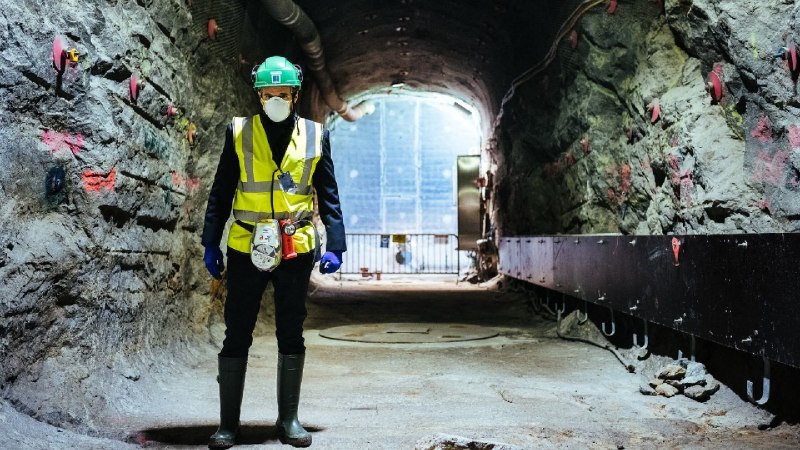
Finland has built the world’s first repository for nuclear waste, designed to last for up to 100,000 years. It is intended for the long-term storage of spent nuclear fuel — a material that remains hazardous to the environment for hundreds and sometimes thousands of years.
The project’s main feature is a durable system for isolating radioactive materials. According to the engineers and scientists behind it, the repository is meant to remain safe even without constant human intervention. That makes the project unprecedented: energy infrastructure is usually planned on a timescale of decades, whereas here the horizon is millennia.
This is especially important for nuclear energy. It helps reduce greenhouse gas emissions and is seen by many countries as a low-carbon alternative to fossil fuels. But the waste problem has long remained one of the main arguments used by opponents of nuclear power. The Finnish project shows that technological solutions for safe storage already exist.
Of course, one repository does not resolve every question. Each country will still have to account for geology, cost, safety rules and public consent. But the fact that such a solution has been built changes the tone of the debate. The question is no longer whether long-term storage is possible in principle, but how to scale approaches like this.