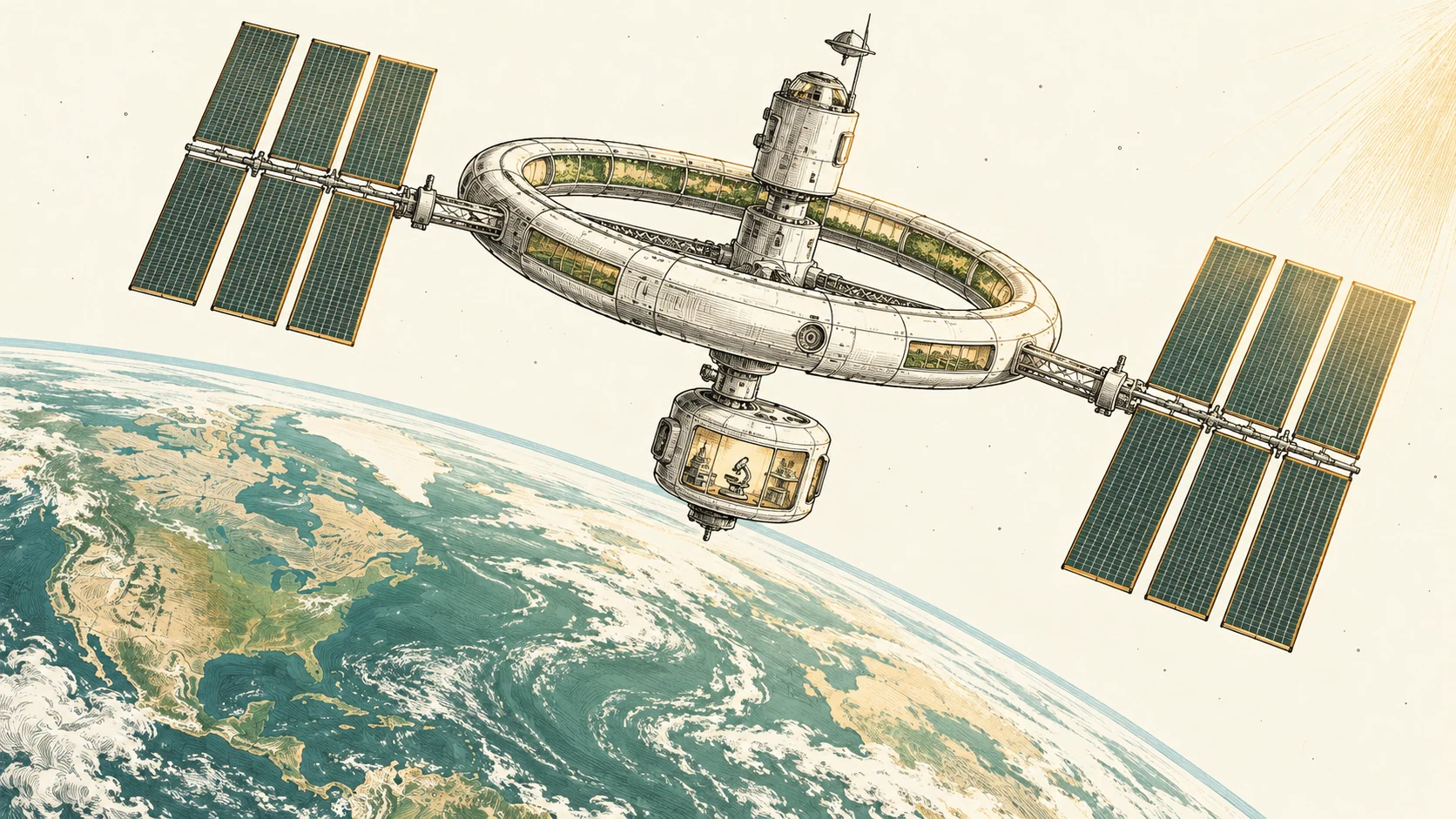
The creation of a Russian orbital station (ROS) will bring new opportunities for scientific experiments, which will be conducted more efficiently than on international counterparts such as the International Space Station (ISS). According to Anatoly Petroukovich, Director of the Space Research Institute of the Russian Academy of Sciences (IKI RAS), the streamlined organization of experiments on the ROS is largely related to an improved power supply system and a powerful radio link. This means researchers will be able not only to expand the scale of their studies, but also to significantly reduce the time required to carry them out.
Petroukovich notes that having modern technologies on the new station opens the way for more ambitious and deeper research that had previously been hindered by limitations associated with the ISS. As an important step forward in Russian space projects, the ROS is expected to create more comfortable conditions for the scientific community and, importantly, improve the quality of research.
The ROS development will confirm Russia’s readiness for effective participation in the international scientific community, demonstrating high standards and the potential for collaboration. Many scientists from different countries will be able to join research work on the new station, strengthening international cooperation and the exchange of knowledge within the space industry.